Friday, April 28, 2017

Food supplements ruining our bodies?

olin.msu.edu

Sometimes life moves way too fast for us and we are not able to do the basic things in life that everyone enjoys such as eating.  We either have to multitask and eat while we work, or just skip meals altogether. While it is never good to miss a meal and not eat, we often times put it lower on our list of priorities than things like work and school.  With this being said, there have been new ways to make sure that you still get the nutrients from that meal you missed, without having to take time out of your busy day to eat. These things are called supplements, and in an article titled “Pros and cons of dietary supplements”, Elle Paula will delve deeper into the good and bad of food supplements that many of us have turned to.  When taking food supplements be sure to keep in mind that they can lower the effectiveness of medicines, and are not naturally occurring so your body does not receive the nutrients the same way.

One of the main downfalls of food supplements is the fact that it lowers the effectiveness of some common medicines that many people take.  For example, Paula wrote in her article that, “Vitamin K can reduce the effectiveness of blood thinners; St. John’s Wort can reduce the effectiveness of antidepressants and birth control pills; and antioxidants, like vitamin C and E, can reduce the effectiveness of some types of chemotherapy.” This is very important information to know before you consider taking food supplements, because if you start taking these supplements on these medicines it can be life threatening.  It would be foolish to have a serious life threatening situation arise because you did not know basic information on the food supplements you are taking.  Always as your doctor if the supplements you are considering are safe to take to avoid any situations that could be fatal. Another argument against taking supplements is the fact that the nutrients are not naturally occurring, they are synthetic meaning they were made artificially.  The difference between synthetic and natural nutrients is that natural occurring nutrients are absorbed by the body while the synthetic nutrients are tougher for the body to absorb.  This means that while you may think you are getting enough vitamin C through your synthetic supplements, since it is synthetic vitamin C you are absorbing less vitamin C than you need.  Doctors everywhere recommend that you actually eat the nutrients, for example vitamin C, instead of taking supplements for it because of this reason.

One good thing that supplements can provide us with is the fact that they can be used to combat chronic diseases.  For example, fish oils are used to combat heart diseases to keep cholesterol levels at bay.  This is good for people who are prone to heart diseases or other chronic diseases because it will allow them to live a normal life without the fear of heart failure or liver failure or other dangerous chronic diseases.  If taken correctly and not misused, they have a lot of benefits for you and your diet.  While you still want to try and eat all of the nutrients that you need in your diet, it is good to have something to fall back on in case you have struggled to eat a healthy diet.  Supplements are a lot faster to take and do not take a lot of time out of our busy day to consume.  If you can take supplements in order to benefit your diet, as well as prevent you from getting diseases that are life threatening, then they are definitely worth taking.  But what we know now is that there are many downsides to taking supplements, especially if you abuse them.

Monday, April 24, 2017

Bottom Line Reasons Businesses Should Hire Ex-Convicts


http://images.huffingtonpost.com/

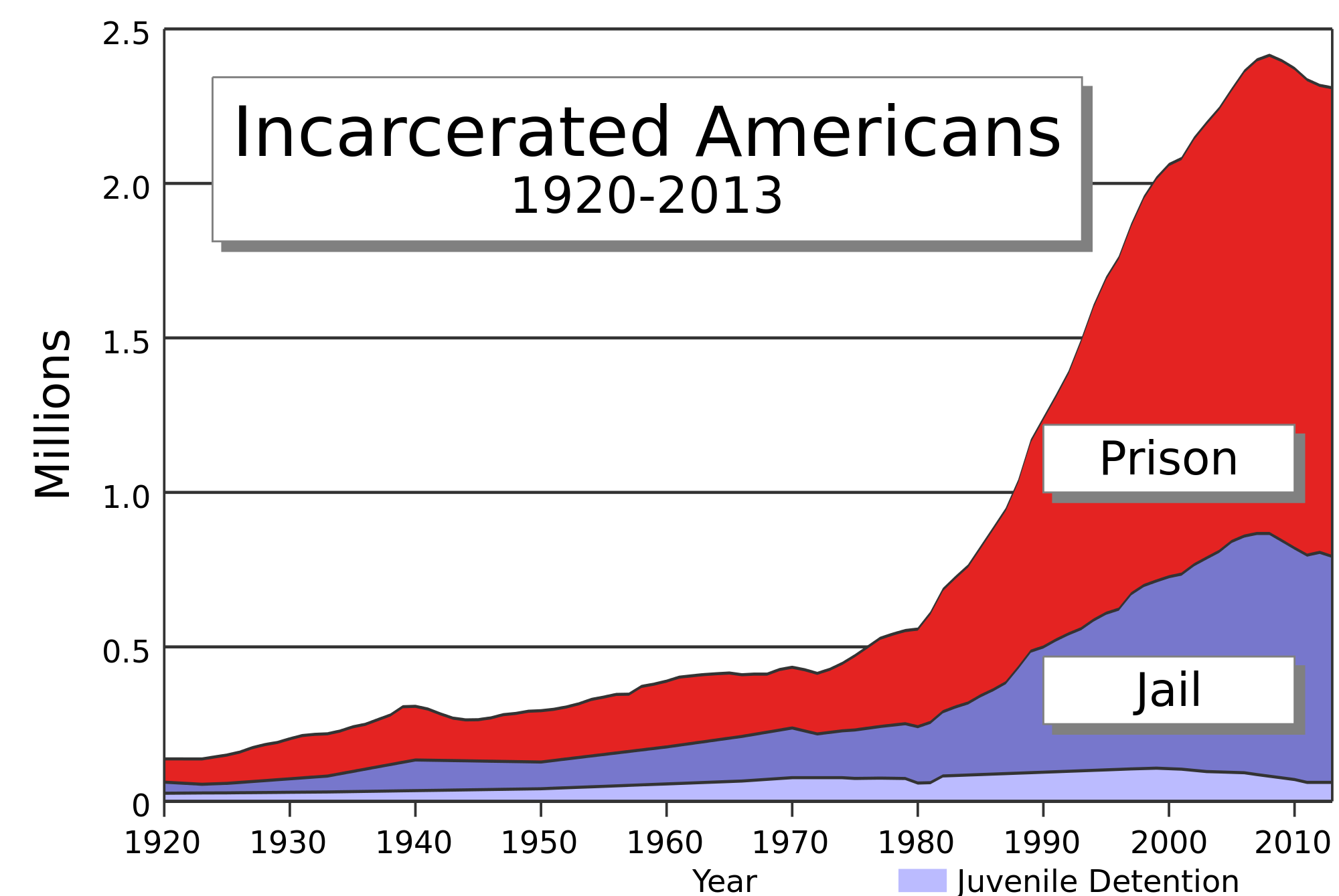
There is no better time than now to get criminals off the streets and reduce the unemployment rate. There are more than 70 million Americans with criminal records and a large number of them are jobless. Employers today not only have an opportunity to give these ex-convicts a second chance but to improve society as a whole by getting them off the streets. The recidivism rates would drop significantly if these men and women had jobs. Without jobs the ex-convicts often find themselves down the same path as before. This cycle is not only hurting the criminals lives further but it hurts both society and the economy as a whole.

Businesses have a golden opportunity to hire employees that are proven to not only save money but are just as reliable as other employees which reduces turnover rate. As Mike Green of the Huffington Post put it  “Ex-felons have far fewer options than conventional employees. Due to the scarcity of opportunities for ex-felons, many employers that hire them have lower turnover than with conventional hires.” Having a high turnover rate within a business can be detrimental to its growth. If employers are constantly having to worry about hiring people who won’t leave it can take take their attention away from other important matters. If business owners are concerned that this ex convicts will steal or hurt their image, look at a study conducted by the University of Maryland in 2009 that concluded people with a record are at no greater criminal risk after they’ve been out seven to ten years than those with no record.

In terms of direct incentives, hiring ex convicts would first off, get rid of the slackers who want nothing to do but leave the office. The ex convicts who are able to get jobs are proven to be hard working and grateful for the opportunity given to them. Often times, they are out to prove society and certain people wrong because it can be difficult to see someone as a good person if they’ve been in prison. Along with this are the bottom line incentives that include substantial tax credits for businesses. Some states even provide partial wage reimbursement, additional tax credits, and other training funds for employers who hire ex-felons.

Ethics of the Legal Drug Trade

www.washingtonpost.com

   As we continue to develop as a world, new and improved drugs continue to come out.  Many of these drugs are vital for some people to lead a normal life.  One of these drugs is the EpiPen.  An EpiPen is a brand name for an epinephrine auto-injector device used to manage potentially life-threatening anaphylactic reactions to allergens.  Essentially if you are having a life-threatening allergic reaction, it will save your life.  The problem is that the company Mylan which makes it, like many others, takes unfair advantage of the fact you as the consumer need this product.  They use their monopoly status to keep prices high, to increase their profits.

   My argument is that what drug companies are doing is wrong.  According to Daniel Kozarich, a senior pricing consultant for Vendavo, in the article, "Mylan’s EpiPen Pricing Crossed Ethical Boundaries," the price of an EpiPen has gone from $100 for a two-pack in 2009 to $608 today. Usually, companies would be applauded for the ability to create revenue through such pricing power. But when it comes to life-saving drugs, consumers interpret these significant increases as the producer profiteering off a person’s life or death need.  To combat this we need to first address the problem head on, and negotiate to keep prices lower.  Next, I believe that government should provide incentive like subsidies for producing newer and better drugs.  In doing so, companies will be more likely to increase drug production and will have more breakthroughs in the field of pharmaceuticals.  Also, prices for drugs like the EpiPen which so many people need will be kept low and affordable.


   I think that this shows that even in markets that have little pricing regulation and transparency, pricing moves must be carefully considered and communicated in a way that demonstrates ethical behavior.  If not given incentive to do so, companies have little stopping them from making prices however high they want to make money.

Future Research Questions:

Can drug companies have alter motives to keep prices high other than to make a profit?

Should drug companies be more regulated to keep them ethical?

Should drug companies be less regulated to foster growth in drug breakthroughs?


Sunday, April 23, 2017

The Cons of Creating Incentives for New Drugs

dailycaring.com

Infectious diseases are a major reason for the health disparity between rich and poor countries. They kill 14 million people worldwide every year, predominantly affecting members of poor populations in developing countries. In fact, these countries bear 98% of the global disease burden for infectious diseases, such as malaria, trachoma, lymphatic filariasis or schistosomiasis. These statistics should alarm you, because having drugs which cannot combat these can lead to serious problems in the future.

Having incentive to create foster new development of drugs to combat infectious disease is important and intentions good, but sometimes having too much incentive can halt growth and development of new drugs.  Companies want to make money, but by having to many incentives it can stop them from making it, halting drug production.

In the article, "Neglected infectious diseases: Are push and pull incentive mechanisms suitable for promoting drug development research?" the issue of promoting new drugs to be made is questioned.  The article states, "Large publicly funded research institutions, such as universities or the US National Institutes of Health, play a significant role in promoting basic research. They help to create non-patentable fundamental scientific knowledge, which provides a base for downstream discoveries of the profit-seeking pharmaceutical industry. This publicly available fundamental scientific knowledge generated by publicly funded research institutions reduces the research costs incurred by the pharmaceutical industry."  Having public funding is a good thing, but many times privatizing funding halts drug growth because of the incentive to make new drugs to make money for oneself cause companies to withhold information which if put together could help develop drugs faster.  By having an incentive to make money, this causes lack of research to be shared which can be detrimental to be making drugs for infectious diseases.


Future Research Questions:

Is money a good incentive to create new drugs?

By having funding for drugs, is that enough of an incentive?

Do drug companies scientists have the same intentions as those who run the company?

Friday, April 21, 2017

The Best Marketing Platform to Advertise With

Americans have become so technologically advanced that there are many ways of advertising, including online advertising, phone advertising, print advertising, broadcast advertising and many more. The easiest and cheapest way to reach a large audience is through online advertising, specifically social media.
Stuart Cooke, the head of digital marketing at Cornell Studios believes social media is the easiest way to target specific audiences and certain demographics. Social media gives advertisement campaigns the ability to show their picture and videos without ever being clicked on.
Some would say the down side to social media advertising is that most of it is not cost per click. When an advertisement is cost per click it costs a certain amount of money every time someone clicks on their ad. When every consumer who clicks costs money, they are tracked carefully by the company. The company then knows who their real customers are going to be and who to target the most. If a company knows who their best possible consumers are, then they will make the most sales.    
I think the approach to advertising can be different depending on what products a person is selling, but my personal choice on how to market a product is cost per click. Working with a target market that was all willing to take time and click on your advertisement can’t get easier to sell to. Even if a consumer doesn’t click on the advertisement, it’s just as effective as a social media advertisement but free with no click.


Link

Trump's Wall

President Trump has made it very clear this past election that if he won the nomination construction of the  1,900 mile wall would be established on the U.S./Mexico border. Trump should not be criticized by the attention he gives to the wall because almost 4% of our current population is flooded with illegal immigrants, mostly coming from Mexico. Trump has also claimed that “Mexico will pay for the wall”, a check that could be as high a 38 billion dollars, Mexico's President Enrique Pena Nieto has said otherwise. The problem with the wall is there's too many obstacles that can be crossed to entering the U.S.
One problem is many legal Mexican visa holders overstay their visits “DHS estimates that of the 45 million immigrants who entered the U.S. by air or by sea on tourist or business visas that expired in 2015, roughly 416,500 were still living in the country in 2016.” There's no way that Homeland Security has the time, money, or resources to deport these immigrants. The U.S. workforce employees over 8 million illegals accounting for many unemployed citizens.

Not only will current illegals stay in America but there's ways around the wall. Drug cartels are known to manipulate and trick custom workers. A wall would have no beneficial effect on illegal drugs entering the U.S.

Why Trump's Wall is a Really, Really Bad Idea

                                                    http://static3.businessinsider.com

I, along with many other Americans understand that a country as large as the United States just simply can’t afford to deport all of our Illegal immigrants. The costs would be astronomical, not to mention the effect it would have on our economy, our communities, and at a personal level separating children from their fathers and mothers. If only there was something to completely stop this once and for all? A wall perhaps? It's hard to interpret what exactly a politician is saying is true in an election year, especially this one. But since it seems like Trump is going through with it, now would be a good time to analyze his plan. Now a wall sounds like a great plan in theory, but realistically a plan as large as that would cost too much money as is and therefore defeat the purpose of putting a wall there in the first place. Not to mention immigration rates are falling, as well as the fact that the border is secure enough as is. That’s why amidst the commotion of debate about illegal immigration there needs to be potential solutions to the illegal immigration problem.

Robert Reich, an esteemed writer for Newsweek writes in his article "Six Reasons why Trump's Mexico Wall is a Dumb Idea", that "The Department of Homeland Security estimates that the total undocumented population peaked at 12 million in 2008, and it has fallen since then. According to the Pew Research Center, the overall flow of Mexican immigrants between the two countries is at its smallest since the 1990s." There is now evidence pointing towards the fact Mexicans are becoming less and less likely to travel here illegally in the first place. It's not because Trump is scaring them away or because of our already strong border patrol, it's because Mexico is getting younger.  Robert Reich states "In 1965, Mexico’s fertility rate was 7.2 children per woman; by 2000 it had fallen to 2.4; today, it’s at 2.3 children per woman, just above replacement level." Mexico's younger generation wants to stay in Mexico rather than leave it. With a new generation comes new responsibilities and it looks like taking care of a family in Mexico will now be easier than it has been historically in the past. With this information, we can already point out the first fundamental flaw of Trump's idea: It doesn't even need to be there in the first place. We already spend 3.7 billion dollars annually to defend the wall, employing over 42,000 inspectors and border patrol agents for extra security as well. All of this on top of the fact that over a third of the border is already completely walled off already, proving that there already is a sizable amount of protection there to begin with.
 In his same article, Robert Reich also cites that the Washington Post's fact checker estimated the cost of the wall itself would cost over 25 billion dollars. And that's just the wall they're talking about. You have to factor in labor costs, and then other added costs over what is estimated by the Trump administration to take over 3.5 years to build. All this money is being allocated in an irresponsible way in my opinion and we don't even know who's gonna pay for all of it. Certainly not Mexico. This money can be used towards Education, NASA, or towards other similar government programs, but Homeland Security should not be looking towards the border when deciding how to utilize our own taxpayer money. This leads me to my next question: What is truly the best way to contain Illegal Immigration?

Do Illegal Immigrants Pay Taxes?


                                                         http://www.newyorker.com

The rhetoric surrounding illegal immigration in the previous election has brought the issue to the forefront of  the American people's concerns. Donald Trump in particular believes these immigrants are simply mischiefs who rob jobs and are a drain to the U.S. economy and therefore do not deserve citizenship.  And then you, the American taxpayer are the one who suffers the most from this.  I believe it should be the American people’s right to have access to the most reliable and true information out there. That is why all the facts need to be presented in this one sided campaign against immigration. That despite all the negative news about immigration there are tons of ways immigrants help to make this country a better place. Overall, illegal immigrants have a positive effect on our government because the income taxes they pay contribute to the Social Security trust fund.

An article from the Atlantic titled “The Truth About Undocumented Immigrants and Taxes”, around half of the undocumented immigrants in this country pay income tax, surprisingly more than what one would think an illegal immigrant would pay. As they mention in their article, it seems rather ridiculous to pay an income tax when illegal immigrants don’t have or rather use a fake Social Security number to file their taxes. They will most likely never receive retirement benefits.

The article also mentions that “Stephen Goss, the chief actuary of the Social Security Administration, estimates that about 1.8 million immigrants were working with fake or stolen Social Security cards in 2010, and he expects that number to reach 3.4 million by 2040. They state that undocumented immigrants paid $13 billion into the retirement trust fund that year, and only got about $1 billion in benefits.”As you can see a large chunk of this income tax ends up in Social Security trust funds, something these programs have seem rather dependent on. As if trust funds didn’t already have enough problems, kicking the door on immigration would only make things worse. Without illegal immigrants, Social Security trust funds may run out quicker than we already expect.  

While I do sympathize with grievances of Illegal immigrants abusing our education system and our public resources, I believe that their values as people living in this country negate any harm they can possibly do. Most if not all of these immigrants came from a worse background looking for a better life. That is one of the fundamentalist ideals this country has been built on.

That's what leads me to my next topic: Why Trump's Wall is a really, really bad idea.

Trade and Globalization as Seen Through Developing Countries

    The economic principle I examined was that “People gain when the trade voluntarily” with the overall question “Is the current system of globalized trade really voluntary trade and do both sides benefit to the same extent?”. The inspiration behind my topic came from the idea that if the trade is globalized, lesser developed “third world” countries can easily be taken advantage of by the more developed “first world countries”. There are many examples of how this economic principle can be applied to the real world. While studying a globalized trade, I found many examples.
    First, in the article “Against the grain; Quinoa” in the magazine “The Economist”, a non-partisan stance about current economic subjects, the idea that fads across the global such as quinoa cause harmful spikes in the smaller country developing the good. What happened in 2013 was that the boom in quinoa’s popularity caused farmers in the Andes to overproduce the grain while also making it too expensive to buy themselves because the price selling it overseas was higher than what they’d buy it for in their home countries. Then, after other countries started to produce quinoa and Peru wasn’t the only supplier—they now had to compete globally—it harmed the local economy. It shows how the globalization of trade benefitted the consumers and middlemen buying the grain from the farmers, but not the farmers themselves, so both sides did not gain when they traded volunteers. The issue comes in when the Andes people soon began farming the grain for millions of more consumers and the increase in the price hit the villages hard when they could not afford to buy their food staple, which brings up the question: does increased economic opportunity really help small societies?
    Second, in the article “A Better Way to Buy One, Give One”, written by Ashoka, a contributor group that focuses on bringing attention to pioneers of social change, discusses how the business strategy of TOMS Shoes, Inc., a show, and fashion brand, uses its status as a “change making brand” to boost their own sales. Toms is well known for donating a pair of (poorly made) shoes for every pair it sells to children in Africa, which on the surface seems like a great idea, but under the surface, not only do the shoes fall apart after a few weeks, it stills the local shoe economy. The article offered two solutions: either don’t use donations as a business tragedy to boost sales or the better idea: set up factories in places in need of jobs and stimulate the local economy. It shows that not all times where globalized trade harms is because of greedy corporations and that even “good deeds” can have negative repercussions because of the complicated nature of the globalized economy.  The overall idea is that companies cannot expect to just donate a good, but instead, to be non-profit, they must enact change for the solution to poverty, otherwise, they just hurt local businesses.
    Third, in the source “European Union’s 10 Point Argument Defending Globalized Trade”, the counterargument to the idea that globalization trade only harms comes from the European Union, who would be biased because the European Union represents one of the major trade country unions. The arguments the article supplied were: the GDP of countries have increased because of global trade, which may be true, however, the post doesn’t prove that individual incomes rise along with the GDP, and if corrupt business practices such as too low wages or child labor went into supporting the GDP rise, then it’s not beneficial to the third world countries, just to the first world countries who profit, “Trade plays a role in the improvement of quality, labor, and environmental standards through increased competition and the exchange of best practices between trade partners” it offers quality control, however, it does not offer protection against employee abuse, as global trade promotes sweatshop labor. It does, however, give employment that would not exist otherwise.  It also promotes the idea that trade creates a peace treaty of sorts: countries who depend on each other economically won't go to war and harm the balance.
Overall, you can see that globalized trade has many benefits and when two nations both gain from the trade it’s great! More efficency, more peaceful relations, and more prosperity overall, however, it’s incredibly easy for larger nations to take advantage of smaller ones which leads to sweatshopp labor, control of economies, and manipulation of trends to suit only the larger economy.


Why we have rules


Photo from: www.theodysseyonline.com


Most people are not fans of rules. Rules are often restrictive and sometimes intrusive. Due to the restrictive nature of rules, many ask the question as to why we even have them in the first place. As we already discussed, regulations serve as the rules the government imposes on businesses and people through the executive branch. They tell us what we can or can’t do. Although many view regulations as restrictive they do serve a purpose in our society. Regulations are put in place to protect what a society views as valuable, such as the environment, health, or consumer and worker rights.
Without federal regulations, us citizens would probably face some difficult challenges because the regulations that are in place to protect us would be gone. As the Washington Times, a popular US newspaper, puts it “try to imagine a government without regulations… what do you think would happen if we had no food and drug administration to tell us what was safe to consume? No financial regulators to protect us from bank failures and financial scams? No health and safety regulators to protect us from unsafe products?” Federal regulations have successfully protected the public from potential dangers, whether it has been stopping potentially dangerous drugs from entering the market, to protecting us from losing money in hard economic times. So, whether we like them or not regulations are necessary.
Overall, regulations do serve a purpose in our society. Regulations are good at protecting valuable parts of a society, by keeping its citizens safe from any sort of danger. This is evident through their protections of the environment, our health, and the rights of workers and consumers. However, there is still a growing debate on if regulations are beneficial to society, which means that we will have to take a look at both the positives and negatives of regulations to draw a conclusion on what role the government should play in the economy.

Drugs and How Companies are Incetivized

www.linkedin.com


 Currently, The number of new drugs emerging in the U.S. pharmaceutical market is at a low point. The Food and Drug Administration (FDA) approved an average of 22.6 new drugs per year from 2005 through 2009, down from 37.2 a decade earlier.  Due to this, there has been a push in creating new incentives for drug companies to start making new drugs.

This article addresses the issue of pros from incentives for new drugs by explaining how government policy has changes to encourage new drugs to be put out on the market.  It explains the various outcomes that occur due to increase in drug production, as well as acts Congress has passed to further research and development of drugs.  

Not only does having new incentives help speed up drug development and production, but it also helps re-purpose drugs in a quick and affordable way to tackle new drugs that were thought to be incurable.  In the article, "Creating New Economic Incentives for Re-purposing Generic Drugs," it states how, "Policymakers from academia, industry, and government have called for federal initiatives to stimulate drug development. Most proposals target the intellectual property environment, because market-exclusivity periods, usually supported by patents, foster revenue generation in the pharmaceutical market.  Having more incentives boosts the pharmaceutical market, and help companies that are looking to make money be ready to pump out more drugs.  This will also help them not spend as much money on drugs by re-purposing, in return lowering the price for the consumer.

I believe after reading all the research is that having incentives to create new drugs is a positive outcome.  In doing this, companies will see the reward they can take from having new drugs and will make them.  The world will benefit from having newer and more effective drugs on the market.  The government will benefit from having a increase in the economy for pharmaceutical sales.  The only problem which could come is the price of the drugs, but that is being dealt with by means of re-purposing drugs like in the article linked above.
    • Does less or more government intervention help increase research and development of new drugs?
    • Should companies be forced to share research so development of new drugs can become faster and more efficient?
    • Is it ethical for the FDA to withhold experimental drugs to be tested on patients who are terminally ill?


Not marketing to the LGBTQ+ community does more harm than good


Whether you realize it or not, LGBTQ+ members in advertising and people in the LBGTQ+ community have begun to be rise exponentially. However, there are still companies that refuse to advertise to the LGBTQ+ community and are paying the price for it. According to the huffington post companies such as Chick-fil-a, Urban Outfitters, Exxon are not in support of the LGBTQ+ community, some companies like The Salvation Army even going so far as to actively lobby governments worldwide for anti-gay policies, including an attempt to make consensual gay sex illegal. What these companies fail to realize though is how crucial the LGBTQ+ community is in our society, especially as consumers benefiting the economy. For companies to sustain themselves and grow their businesses it is crucial they market to the LBGTQ+ community while they continue to be more and more accepted throughout society.
Companies that have marketed directly to the LGBTQ+ community have benefited greatly from this largely still untapped and growing market. Some companies may be surprised to find out the size of the LGBT community, with the spending power of American LGBT households at a whopping $800 billion according to Buisness Insider. This is why companies such as American Airlines and CoverGirl are smart when starting to be inclusive in their advertising. They understand how crucial it is for their companies to grow. Also, believe it or not but there are also some differences in heterosexual spending vs. LGBTQ+ spending which is something companies need to take into account. According to business Insider, gay and lesbian households make 16% more shopping trips than the average U.S. household, making the impact on total spending about 25% for same-sex households. This does not even account for the entire LGBTQ+ community and it is still much higher than opposite-sex households. While it’s important to understand that you can not stereotype based off this statistic, The numbers are especially high in gay men who on average shop 30% more than the average American, averaging out to about  $2,045 more per year spent on packaged goods. When I see statistics like this it is hard to wrap my mind around why anyone would not market to the LGBTQ+ community when it will clearly benefit their companies! Mark Elderkin, CEO of the Gay Ad Network, which focuses on the LGBT niche market even said mainstream gay messaging has “passed the tipping point, where there’s more to gain than there is to lose” for advertisers. At this point, companies need to wake up and put their beliefs aside in order for their businesses to not only expand but prosper.

While these companies in support of the LGBTQ+ community are thriving, companies not in support are not only missing out on potential growth markets but may actually be suffering. People in the LQBTQ+ community may not support a company that doesn’t support them as a community and as individuals. Many people in the LGBTQ+ community refuse to buy from companies that do not support LBGTQ+ rights, and rightfully so. I have a very accepting inclusive friend group, all of us coming from different backgrounds as well as all identifying everywhere on the LGBTQ+ spectrum. Once one of my best friends, Terry and I found out that Chick-fil-a was anti-lgbtq+ we decided we would not eat there anymore. It’s not that we don’t like Chick-fil-a or its delicious waffle fries, but him being gay and me being bisexual, we do not want to support a company that doesn’t support us. Overall companies need to realize how crucial it is for them to market to the LGBTQ+ community.
It’s not about including LGBTQ+ members in advertising, it’s about getting it right.


We have all seen the LGBTQ+ community presented as a kind of joke or punchline, like the straight man trying to pass himself off as a woman, wearing a dress and a terrible wig, acting effeminate but with an obvious five-o-clock shadow or even a moustache.  How do you imagine these sorts of images make those in the LGBTQ+ community feel?  And how do you think they would feel about a product that was advertised in this way?  The article, “LGBTQ Marketing and Advertising: Best Practices” is presented by the Human Rights Campaign and uses multiple reputable sources to arrive at best practices for marketing to the LGBTQ+ community.  When marketing to the LGBTQ community, it is important to avoid using stereotypes and negative images of LGBTQ individuals, and to show the diversity of that community.  Effective marketing to the LGBTQ+ community must be sensitive and present a realistic portrayal of LGBTQ+ individuals to avoid alienating them.

Ideally, LGBTQ+ individuals should be included in all advertising and reflect the diversity of the LGBTQ+ community. This should include LGBTQ+ individuals, family members, friends and couples that reflect varied ages, races and genders, etc, not just gay men.  Bisexuals are rarely shown at all, for example which creates even more stereotypes against the bisexual community, simply because people do not understand it.  An unbalanced depiction of extremely effeminate gay men or extremely masculine women are old ideas that alienate many. I have seen many of my friends get discouraged and upset about their own sexuality by seeing it wrongly portrayed by the media, especially when they see it in one of their favorite T.V. shows or movies.

It is important to avoid stereotypes, such as the effeminate gay man or  masculine lesbian woman.  These are outdated ideas that turn people off, especially people in the LGBTQ+ community. When my friends and I see a commercial or ad with an obvious LGBTQ+ stereotype we can’t help but shake our heads and laugh. At this point, companies should know better than to use overused stereotypes and think the LGBTQ+ community will respond positively. It’s not about just adding in LGBTQ+ members to commercials, it’s about doing it right and portraying the community correctly. One way to avoid stereotypes is to use real gay or lesbian individuals, including well known actors, athletes, and other celebrities.  Using real transgender persons adds authenticity and believability to advertising.  Also, showing LGBTQ+ individuals in normal, average, everyday situations helps. It is important to accurately portray LGBTQ+ individuals, and will result in more successful marketing.

Wrongdoings and Fraternities

credit to society19.com

When the word Greek Life comes to people’s mind it is often associated with parties and drugs. Fraternity parties are the huge part of Greek Life and college life as a whole. The interesting part about Greek Life parties is that sororities are not allowed to have alcohol in their houses making them bend to the male. But through a Rolling Stones article, “The Most Out of Control Fraternities in America”, written by Blaine McEvoy and an article from The Atlantic, “The Dark Power of Fraternities”, written by Caitlin Flanagan we view the supposed big negative of Greek Life. In this blog post, we see that people are attracted to Greek Life's parties and doing drugs because people enjoy being mischievous and being part of a popular social scene.

In the article “The Most Out of Control Fraternities in America”, Rolling Stones gives an actual list of fraternities committing horrendous acts. Kappa Sigma of Tulane University was cited having
“State Police seized $10,000 worth of psychedelics from the Kappa house after two 19-year-old brothers scored 107 grams of ecstasy from undercover officers. The bounty included 57 tabs of LSD, 69 grams of mushrooms, 48 grams of opium, 22 grams of marijuana, .80 grams of cocaine and .91 grams of DMT.” Another example given was  Sigma Alpha Epsilon of the University of New Mexico was said to that “over the past five years, the SAE brothers have been repeatedly cited for hazing and damaged property. But rapes have plagued this Albuquerque house since 2007.” These are worst case scenarios but these stories are what gives fraternities and Greek Life a bad name.


“The Dark Power of Fraternities” takes a different approach. They do agree that “They [fraternities] also have a long, dark history of violence against their own members and visitors to their houses, which makes them in many respects at odds with the core mission of college itselfThere is something attractive about being mischievous, it makes you stand out, it makes you noticed. Being an icon on college campuses is a dream of students whether it be for grades, sports, or in this case wrongdoings.

I believe that a big part of joining Greek Life is the social scene. It’s scary to enter an unknown place with no friends and Greek Life gives you a unique opportunity to instantly make a handful of friends that appeared to have some of the same qualities as you. What comes with this social scene are parties and with parties come wrongdoings. I don’t think that fraternities should be banned from having parties, in fact, I promote it. It allows people to make more friends and make connections. The bad things are the drug and rape, but today in American society there is something oddly fascinating about it and I believe that’s the attraction.

The Simplistic Process of Regulating


Photo From: http://www.cutimes.com/

America: one of the few countries that have been originally founded on ideas brought from moral absolutism, that all humans have certain unalienable rights such as life, liberty, and the pursuit of happiness. This helped bring our country democratic processes such as free elections of representatives to represent the masses. These representatives help to pass legislation that the American people want. However, there appears to be a slight flaw in the system. As we look towards regulations it is easy to see that our democratic system of government may not be as democratic as it seems. Regulations play big part in our lives. As consumers, basically everything we buy has been regulated by the government, whether it was your favorite childhood toy, the painkiller you took for your headache, or the meal you just ate, everything is regulated. However, in order to fully understand regulations, you must first look at how they’re constructed.  
Regulations, unlike laws are not passed by congress, rather they are extensions to bills and are thought of and created by the different agencies in the executive branch. Why is this? Well as our constitution says, the executive branch is supposed to enforce the law while the legislature creates the law. Regulations are seen as a view on how to enforce a law that was previously passed. Usa.gov, the government’s main website to help inform the public on government information and services, describes the process of creating regulations as “rulemaking”, and it is a fairly simple process. According to usa.gov, if “an agency wants to make, change, or delete a rule, the agency will publish the proposal in the Federal Register and seek public comments” and then “after the agency considers the public's comments and changes the rule if necessary, it publishes the rule’s final version in the Federal Register” thus creating a regulation. This process is an efficient way of creating rules within our government and enforcing laws.
Overall, the process of creating a regulation is not very complicated. The Executive branch is in charge of creating regulations, as they basically serve as an interpretation of the law. Furthermore, because of the simplicity of the process, our government can act more efficiently in enforcing the law. Looking forward, now that we have discovered the process of creating regulations, there are a few more questions that need to be answered, such as: why do we regulate in the first place?

Thursday, April 20, 2017

Tourism decreasing under Trump


President Trump’s travel ban has started decreasing tourism in America from foreigners, causing billions of potential dollars to be lost. According to the Chicago Tribune, New York being the most travelled city in America for foreigners has already seen a 2% drop in tourism this year. This will mark the first decline in New York’s tourism in eight consecutive years. With Trumps plan in act the U.S. will lose about 4.3 million international visitors which will translate to 7.4 billion deficit of lost revenue. A defect of this magnitude is not only causing airlines/airports losses in revenue but also hotels. Trump, being a billionaire needs to be more aware of these financial disadvantages he's causing in office and may also experience some of the backlashes himself owning 11 hotels.
Contrary of the ban decreasing tourism, some may argue that the media is what's giving this ban an negative connotation. "We've seen larger declines in flight-search demand corresponding to dates when the executive order has dominated the news cycle," said Patrick Surry, the Hopper chief data scientist. The reputations of anything to do with travel go along way, look at United airlines for example. Last week we experienced a video broadcasted on almost any news sight of David Dao, a passenger on United flight 3411 get violently dragged and beaten out of his seat, this has led to thousands boycotting the airline and the stock plummeting. The media can make almost any questionable situation a PR nightmare, especially with politics.
While I do understand that we rely on the media, much of Trump's campaign has been plagued with newscasters disapproval translating to the viewers. I personally have no interest in politics but watching this campaign unfold the past six months has made me much more aware of the harm done by newscasters personal beliefs unfold to the viewers.


Globalization will help the environment

daks2k3a4ib2z.cloudfront.net Many people, when thinking of big companies, picture selfish, uncaring men in business su...