Sunday, February 26, 2017

Improving society through hiring ex convicts

http://cdn.blackenterprise.com
What is one way the United States government can lower the unemployment rate, reduce crime, and improve the economy? The underlying issue with these problems lies within our country’s ex convicts. An article from the Huffington Post outlines the reasons why hiring ex convicts not only helps businesses but can improve society as a whole. Businesses often overlook this area of employment and are missing out on key benefits that could help them greatly. The government offers several incentives for businesses to hire ex convicts. The benefits often extend past the tax breaks. The public may be encouraged to shop at certain places knowing that the company is trying to help the community by giving the ex convicts job and getting them out of trouble. By hiring ex convicts it can send a positive message to the public and can make a considerable difference in changing these former criminals into something the whole community benefits from.

Why should these former convicts be given so little after they are released from prison? It is very difficult for someone to get back on their feet when they have nothing. A job and proper government programs are the tools someone who was recently released needs so they can start contributing to society. The odds of someone going back to prison has been rising in recent years. In a study done by the Bureau of Justice Statistic, they found that “inmates released from state prisons have a five-year recidivism rate of 76.6%, and the USSC study calculated comparable federal prisoners released have a 44.7% re-arrest rate after five years”. During someone’s prison sentence the goal needs to be focused on rehabilitating them into people who can not only learn from their mistakes but join the workforce. Businesses who hire these ex convicts can have a positive impact on both the community and economy. If businesses hire more of the ex convicts, the recidivism rates will drop and we will see a less crowded prison system.

The positives from hiring the ex convicts far outweigh the negative from a business standpoint. They are not only saving the company money through tax breaks but they are hiring people who going to be more willing to stay loyal to the company. For the ex convicts who want to get back on their feet, they are going to be forever grateful to the people who gave them a job which creates loyalty between the employers and employees. These companies who hire the ex convicts would be benefiting much more than just themselves. As long as these former convicts are on the street, it does nothing but hurt our economy. The longer that former inmates remain unemployed following release, the greater the risk they will seek income through alternative means. Their fate impacts the fate of families, communities and ultimately society at large." This leads to another important question to look at regarding the unemployment. How much is the government doing while these men and women are in prisons to get them a job when they are released?

Wednesday, February 22, 2017

Drugs...So What For?

http://www.genomicslawreport.com/wp-content/uploads/2009/12/Drugs-Money.jpg

What are the main incentives big companies use to decide to make a new drug? Many people still believe that creating new drugs is for helping those who are in dire need of it to treat whatever disease or ailment he or she may have. To some degree this is true, but the majority driving factor is the cost of inventing and developing a new drug. According to an article in Nature Reviews Drug Discovery, the number of drugs invented per billion dollars of R&D invested has been cut in half every nine years for half a century.  This means that the people who are needing new drugs are not getting them due to the costs.  I believe that money is an important factor in creating new drugs, but should not be the driving one.  I hope i the future our society can remove roadblocks that keep new drugs from reaching patient, and really see that individuals who suffer need these new drugs.


According to an article in Forbes, "The Cost Of Creating A New Drug Now $5 Billion, Pushing Big Pharma To Change," Matthew Herper explains the business side of new drugs being created.  This is a reliable source because it is backed by real time facts and statistics from credible institutions such as the UCSF, Genentech, National Center for Advancing Translational Sciences, and a multitude of scientists and economists.  This was published only a few years ago, and still is prevalent information to use today because the market for new drugs remains the same.  Matthew Herper, a full time staff member of Forbes is a journalist who covers science and medicine with a passion.

According to the article, "the cost of inventing and developing a new drug, a cost driven by the uncomfortable fact than 95% of the experimental medicines that are studied in humans fail to be both effective and safe."  This shows how companies creating these new drugs must raise the price of a successful drug high enough to compensate for the money lost from another experimental drug.  "A company hoping to get a single drug to market can expect to have spent $350 million before the medicine is available for sale. In part because so many drugs fail, large pharmaceutical companies that are working on dozens of drug projects at once spend $5 billion per new medicine."  Here the article explains the logic behind drug prices being so high.

Argument: The uncomfortable fact is that 95% of experimental drugs fail to be both effective and safe for human use, costing companies billions of dollars.  Companies must ultimately determine if how much money they spend creating a drug will help them gain or lose profit.

  • Future Resource Question: 
    • Would government funding help lessen the need to create new drugs for profit, and instead help with creating new drugs for the purpose of helping individuals who are in need of them?
    • Does the creation of drugs take into the consideration of the people who need them, when determining the incentive to make them?
    • Does having money as a main incentive for new drugs actually help more than having the incentive to create new drugs for other incentives?


Tuesday, February 21, 2017

In what ways does Korea’s societal standards impact women ?

Do you wear makeup for yourself or because society tells you that makeup makes you prettier? I have gathered information from three sources, “The Price of Beauty in South Korea”, “The Media’s Effect on Women’s Body Image”, and “The Asian Beauty Problem”. These sources are reliable because they come from first hand accounts, personal experience and studies establishing credibility regarding the matter. Due to the heavy conservative and high expectations Korean culture has upon society, the majority of those impacted by this are women. The normality to have cosmetic surgery to have facial features enhanced, beauty products to whiten the skin in order to look more privileged and wealthy, and the pressure to maintain a certain body type are just some examples of the lengths Korean women will go to in order to meet the social standard.

www.earthexcursion.com

  South Korea has the highest rate of plastic surgery (and performance of such). In result of it’s popularity, it became the norm and socially acceptable, even encouraged upon to do so; to fix your appearance using enhancement features whether it be plastic surgery or skin care products. On top of their high plastic surgery rate, they are known “for being very strict with tradition, social norms and education. The pressure to be perfect is everywhere and not only for one’s own good, but also to honor one’s family and ancestors”. The high standards of beauty impacts Korean women when it comes to physical appearances. According to a study done mentioned in The Price of Beauty  “When asked why people went under the knife, most of them said that they assumed people wanted the confidence and to just simply look good. 3 mentioned that society wants for them to be attractive and that people are often compared in terms of looks”.One participant added that they may feel pressured to go under the knife even though they don’t necessarily want to just to meet society’s expectations. The social standards often intermingle with “other aspects of life and gender roles”. As taken from personal experience from the “Asian Beauty Standard”, mothers frequently reiterate to their daughters to “talk quietly and be ladylike”, to invest in products to stimulate pale, white skin as it is a symbol of wealth and high social status. Modifying one’s external appearance is not all that is affected by the social standards set by South Korea. It’s often drilled into a child’s mentality to uphold a certain way of life starting from a young age.
 
  This problem to be as fair-skinned as possible was introduced by Westerners. However, the need to indulge in every single possible product there is on the market to fulfill that needs to end. As a cultural community, we need to actively reject limiting judgments on physical beauty — comments like “You’re fat for an Asian,” “You’re so pretty and docile,” “Why are you so dark-skinned?” and focus on the naturalism of everything of the individual. “Today, Asian-American girls aren’t mincing around on maimed feet. Instead, they’re silently suffering from eating disorders, undergoing radical plastic surgery procedures to look more “Westernized” and paying a tremendous price for our collective failure to embrace an Asian-American culture that doesn’t worship beauty as all-important” said Adora Svitak. According to Cutler on Hamilton,  more and more younger girls are focusing on their body image “because they believe what you weigh determines your worth,” he observed. Women, for example those in South Korea in particular, shouldn’t have to rely so heavily upon societal standards even though it may seem hard to. Which leaves me to end this blog with another question: compared to social standards, how might media influence product usage?

How do companies market to the LGBTQ+ community?


  • RESEARCH TOPIC/TITLE:
How do companies market to the LGBTQ+ community?


Number four, Institutions are the “rules of the game” that influence choices.

  • OVERALL RESEARCH QUESTION THAT CONNECTS MY TOPIC TO THE ECONOMIC PRINCIPLE:
How do companies market to the LGBTQ+ community?


  • 3-4 SUB QUESTIONS/TOPICS THAT HELP ADDRESS THE OVERALL RESEARCH QUESTION and EMBEDDED LINKS TO RELIABLE SOURCES THAT HELP ANSWER THE QUESTION
  • In what way can/do companies wrongly portray the LGBTQ+ community?
  • Advocate News
  • Harvard Business School
  • What risk are companies taking when marketing to the LGBTQ+ community?
  • investopedia
  • How can marketing to the LGBTQ+ community benefit companies?
  • abcnews

Monday, February 20, 2017

Sports Merchandise


You know that sports fans spend a lot of money on merchandise or tickets to the games, but when you really start to think about how much they spend and why it blows your mind. Spending all that money to spend a couple hours watching a sport that you could play at home with your friends. My main source is from the trusted source of News Feed. News feed is a popular national news source that many people use daily. Ticket prices are determined by varying levels of demand and the popularity of sports merchandise is often based on people wanting to represent their teams and look fashionable.

Going to a sporting event is something that almost everyone wants to try once whether they’re a sports fan or not because of the experience. It’s most people’s dream being able to watch their favorite teams or players play in person at least once even if that means paying a lot of money to do so. Sports tickets relate to the supply and demand charts in how the bigger the game, the more the fans want to go to the games so the higher price they are willing to pay and it’s the same vice versa. An example is tickets for the Chicago Cubs games that are originally sold for $200 went for $6,000 in the World Series. That is a ridiculous price jump and a ridiculous price to pay for one game, but many were willing to pay that price for the experience that they feel is “priceless”.

Sports merchandise is huge in our market today. Everywhere you go you are almost guaranteed to see at least one person wearing a sports organization’s hat, shirt, shorts, shoes, etc. People want to represent their team or player by wearing their merchandise. There is a sense of pride in wearing that stuff for fans. Another reason people are willing to pay hundreds of dollars for a jersey or pay for an expensive hat or shirt is just for the fashion of it. Jerseys have become a large fashion trend in teens and young adults especially in recent years, and you see everyone wearing sporting gear all the time because of how it looks. Team’s are not only playing for their team to win, but they are selling a brand to the public at the same time. There is a sense of joy and pride that fans receive from going to sporting events and wearing their favorite team’s merchandise.

Future Research Questions: Are more popular players' jerseys more expensive? How much more?
What are the profit margins for jerseys and other sports merchandise? How do sports teams and leagues combat the selling of counterfeit merchandise?

Donald Trump's Tax Policy

http://money.cnn.com/


How Will Trump fix the Economy?

President Trump has a lot to fix in his tenure as President, but one of the most important things to do is fix the deficit in the government, and change the tax rates to benefit the people of the United States. Donald Trump needs to decrease taxes to the middle class and working class in order to bring back stability to the middle class and upper class.
           As Donald Trump reaches office he needs to create a tax plan to benefit the citizens of the United States and decrease taxes in the middle and upper class. In an article on salon.com it us said "Middle-class families in general will experience tax cuts around 2 percent, although this is nothing compared to the 13.5 percent cut for America’s wealthiest 1 percent." With this being said Donald Trump plans to lower taxes to the middle and upper class because he believes in can help stabilize the economy. In today’s society many people who make over $300,000 a year are taxed upwards to about 40 percent. Donald Trump plans to lower those taxes by 13.5 percent so the upper class can keep more money, because right now that is just not fair. Also, with the middle class feeling the effect of that he lowers taxes for them to bring more stability to that class and keep them out of the lower class.
President Trump has declared his options on how to approach the tax problems in the United States, but the real question is when they will go into effect. In an article from CNBC, the article said “Still, those hoping for tax reform will likely have to wait months, at least, for it to get done. Due to the congressional budget process and political realities, Trump may not sign tax policy into law until late this year or even next year, experts said.” With this being said Donald Trump’s tax plan might not go into effect until a while. With his presidency he declared change imminent, but in reality it might be longer than expected. We have an idea of what Trump will do with his household taxation philosophy, but a pivotal part of his presidency is going to be the taxation he imposes on corporations.

What types of social media are brands using and how are they effective?

www.marketingland.com

In today’s world, social media plays a huge role in how we’re able to access information and stay connected with the latest happenings. According to articles from the Harvard Business Review and Ad Age, an advertising and marketing news source, the way that fashion brands utilize their social media presence can have a huge impact on the success of their business. These types of social media methods include implementing branded content, as well as two widely used websites/apps, YouTube and Instagram.
According to The Harvard Business Review, “branding is a set of techniques designed to generate cultural relevance.” Furthermore, it states, brands also infiltrated culture by sponsoring TV shows and events, attaching themselves to successful content.” The reason why branded content is so successful is because it appeals to audience in a emotional or psychological way. The way it is done has evolved over the years as branded content was frequently seen mostly during events or television broadcasts, for example, Nascar racing. Each car or driver is branded with a business logo from brands like Sprint or Coca-Cola.  However, now, this branded content is often implemented in the form of social media posts.  Nowadays, celebrities are often seen on various social media platforms mentioning or wearing specific clothing brands in order to promote it. As a result, consumers see this and are influenced by what the content is associated with. For example, Seeing a celebrity via social media advertise a new product is effective for society because consumers see them as wealthy, successful and influential figures which makes them  want to buy that product even more.
In addition, YouTube has become a widely used medium for delivering branded content as well as other content that is used to influence consumers buying habits and attraction to trends. Along with the videos constantly being uploaded to YouTube, the people who produce them are also have a major impact in how consumers behave toward the content. Since YouTube is a community that is freely available for the public to join, it’s not just movie stars who are putting out this influential, product-selling  content; these are real people who gained a following simply due to creating content in which viewers have a common interest in. For example, the Harvard Buisness Review states, “YouTube’s greatest success by far is PewDiePie, a Swede who posts barely edited films with snarky voice-over commentary on the video games he plays. By January 2016 he had racked up nearly 11 billion views, and his YouTube channel had more than 41 million subscribers. How did this happen? The story begins with the youth subcultures that formed around video games. When they landed on social media, they became a force.” After this crowdculture develops, the ability to influence becomes easier. For example,  beauty and fashion YouTubers who started out creating videos as a hobby, have the ability to grow a large following and in turn, get the opportunity to be sponsored by bigger makeup and clothing brands to promote their products through their videos to influence consumer behavior.
The platform of Instagram has also been helpful in establishing connections between retailers and consumers. According to Ad Age, “ A designer can communicate with her audience on a moment-to-moment basis through sponsored Facebook groups and fan pages, online chats, Twitter feeds, Flickr, YouTube and new social shopping channels that facilitate two-way conversations.” Instagram, being primarily a visual photo and video based platform, has the ability to draw in consumers with eye-catching designs and visually appealing, fashionable content. By doing so, it builds the brand’s identity, or how it wishes to appear to the world. It gives a more personal, behind-the-scenes look into the brand as opposed to consumers simply knowing them for their name or their products.
In the next blog post, the idea of small buisnesses will be discussed and how social media helps them in gaining exposure.

Price Doesn't Always Equal Quality


Quality– it’s something we look for as consumers. Designer brands, expensive clothing, sports cars. Most of us would say that these are all pretty high quality goods.
Not necessarily.
We look at an item, and think: “if this is expensive, it must be good,” or “well, this item doesn’t really cost all that much, it probably isn’t that great of quality.” However, price plays a funny role in the way we perceive an item.
Corbett Barr, entrepreneur and co-founder of Fizzle, explains this phenomenon. In his article titled “Cheap vs. Expensive Wine: Can You Taste the Difference?”, he examines a study published by Robin Goldstein and a group from the American Association of Wine Economists. The study explains how an item’s price affects the way we perceive it as consumers:
“Over 500 people tasted wine flights composed from 523 different wines ranging in price from $1.65 to $150. They then answered the question ‘Overall, how do you find the wine?’


Image source: coravin.com


‘The bottom line is that in blind tastings of regular people, there is no correlation between the wines they like and the price of the wine. In fact, the paper found a slightly negative correlation, suggesting that regular people actually prefer cheaper wines.”
So what does this mean? Essentially, wine and other brand name items are considered “positional goods.” Positional goods have value– however their value lies in their desirability. Think of it this way– are Louis Vuitton bags really worth three-thousand dollars of material? Absolutely not. Their bags are positional goods. They make their handbags for next-to-nothing and sell them for a fortune. Designer brands make staggering profits because they raise the prices of their goods, lettings consumers know that their products represent status and wealth. However, status and wealth have little to do with quality. It’s a marketing gimmick, is all it is– so for those of you who swear by expensive wines and handbags, remember that price doesn’t always equal quality.

Future research question: How do companies use incentives/psychology to attract buyers?

Sunday, February 19, 2017

What are the benefits companies can offer employees?


                                                            http://starlingbrook.com


Trying to balance between family and career is probably one of the most challenging things one can do. Studies have proven that having a great control over your own life results in a greater management relationship. This source talks about how a company could improve an employee's life, by making minimal changes to the working environment. Employees with a balanced work life are less stressed and more motivated at work, which automatically increases the company's productivity. Encouraging a healthy work life is beneficial for the company as well as the employees.

Work life balance is very important therefore, employers can consider offering a few benefits to the employees. The healthiest way to have a balanced and stress-free work life is by eating healthy and exercising. Companies can encourage their employees to workout by having an onsite gym and maybe consider offering their employees a membership discount. A lot of the employees who are also parents have double the amount of stress in their life, and there is a possibility that they carry their stress to work. Companies can make it easier for these parents by either having a daycare center in the office building or by having a flexible start/finish time for parents who have kids going to school. A more enjoyable way to relieve stress and help workers to get to know each other is by taking them out for lunch once in awhile or planning picnics, parties, birthday celebrations and other fun activities.

Besides these benefits, the writer also talks about different ways to encourage balance in the office. A lot of people associate work with stress and one way to change that is by being organized so employees don’t feel overwhelmed or anxious. Encouraging short breaks throughout the day or creating a “quiet space” for employees going through a rough time would be very beneficial. Apart from that, employers can recommend unpaid leaves for emergency situations and be flexible by offering employees an opportunity to work from home when necessary. Team building exercises and paid jobs as incentives can encourage them and create a bond between workers. Increasing vacation days has been proven to make employees both mentally and emotionally happier. On top of all that getting advice from the workers and making sure that the management team also follows the same rules is the most beneficial way of creating a healthy workplace.


In my next blog post the importance of employees health will be discussed. 

Thursday, February 16, 2017

How will Donald Trump's immigration policies (e.g. travel ban) affect terrorism, tourism and companies?


  • OVERALL RESEARCH QUESTION THAT CONNECTS MY TOPIC TO THE ECONOMIC PRINCIPLE: How will Donald Trump's immigration policies (e.g. travel ban) affect terrorism, tourism and companies?

How Can We Make Globalization As Equally Beneficial As Possible?

crotraining.co.uk

 Institutions are the “rules of the game” that influence choices.
How can we make globalization as equally beneficial as possible?


    • What positive and negative influences does globalization have on the world?
      • Link from Forbes clearly outlining pros and cons
      • Link from OccupyTheory with top four advantages and disadvantages
      • Link from EconomicsHelp with list of costs and benefits


    • How does globalization affect citizens?
      • Link from Skwirk that explains different types of affects globalization has
      • Link to article from National Academics Press about impact of globalization


    • What is currently being done to better globalization?

European Union’s 10 Point Argument Defending Globalized Trade


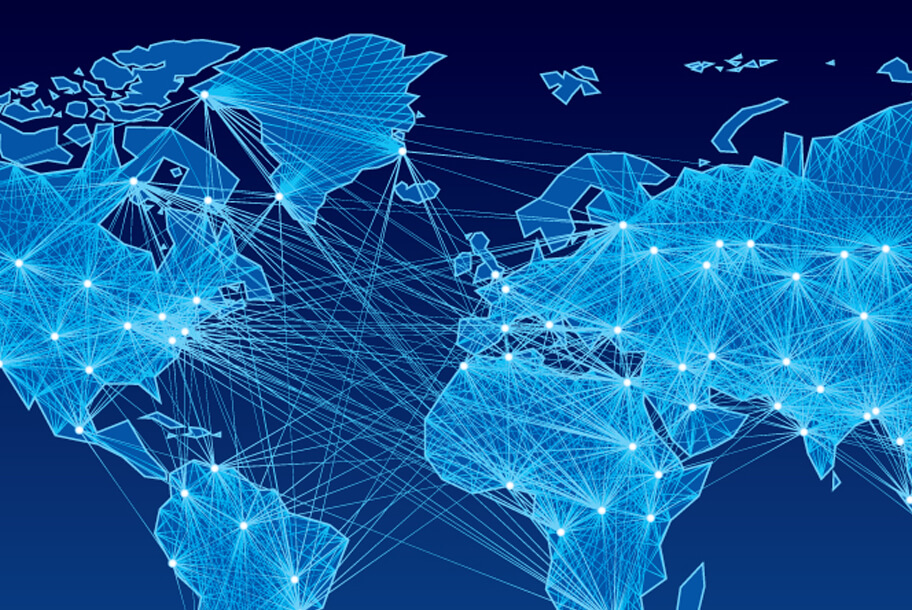
The source “10 Benefits of Trade for Developing Countries” put out by the European Commission, a branch of the European union that manages treaties of the European Union, including economic policies such as this, informs consumers with ties to the European Union marketplace on why globalized trade benefits the global community. The pamphlet gives consumers a Ten-point argument on the benefits of trade, but doesn’t discuss the possible cons, which is why the source is not reliable. I presents the counterargument of the thesis I plan to support on why globalized trade harms communities. The argument presented in the source promotes the Euro-centric idea that globalized trade reduces poverty, increases global income, delivers a wide range of goods, and promotes global peace. 

The source argues that increased global trade will “reduce poverty by generating growth through increased commercial opportunities and investment”. The Post refers to ‘Third World Countries’ that typically produce raw materials traded and live in poverty compared to first world countries. Think raw cocoa producers in South America compared to Hershey’s company in the United States. It argues that the GDP of countries have increased because of global trade, which may be true, however, the post doesn’t prove that individual incomes raise along with the GDP, and if corrupt business practices such as too low wages or child labor went into supporting the GDP raise, then it’s not beneficial to the third world countries, just to the first world countries who profit. “Trade plays a role in the improvement of quality, labour and environmental standards through increased competition and the exchange of best practices between trade partners” it offers quality control, however, it does not offer protection against employee abuse, as global trade promotes sweatshop labor. It does, however, give employment that would not exist otherwise.  

The post argues that a globalized market allows “developing countries to access new markets and new materials which open up new production possibilities.” Think of the Columbian Exchange idea that helped make America into the economic powerhouse it is today. It also encourages innovation by combining minds of all nations, and new goods spark ingenuity.


Globalized trade also breaks down barriers for small business and up and coming companies to trade without barriers, and it also helps consumers by giving them a wider range of goods, so that they may chose more competitive prices or unique goods. Many luxury trade goods from small, often impoverished countries find markets in America and Europe, so crafts people still make profit even though the majority of consumers in their community could not afford the goods. While it does promote opportunity, the bigger mission should be to consider why local markets cannot afford local goods.  
http://www.pewresearch.org/

Employees Health


  • RESEARCH TOPIC/TITLE: Employees health


  • OVERALL RESEARCH QUESTION THAT CONNECTS MY TOPIC TO THE ECONOMIC PRINCIPLE: How can companies motivate employees to be healthy?


  • 3-4 SUB QUESTIONS/TOPICS THAT HELP ADDRESS THE OVERALL RESEARCH QUESTION and EMBEDDED LINKS TO RELIABLE SOURCES THAT HELP ANSWER THE QUESTION
    • What are the benefits companies can offer employees? Pingboard
    • Why is it important for the employees to be healthy?   Fitforworkscotland                                                                                 Capitalregionchamber
    • Reasons a company should offer health benefits to their employees Unicornhro

How do advertisements and endorsements persuade people to buy products?

  • RESEARCH TOPIC: Effects of advertising on consumers


  • KEY ECONOMIC PRINCIPLE I’M ADDRESSING:  How much of an effect can an advertisement have on a product or services sales.
  • OVERALL RESEARCH QUESTION THAT CONNECTS MY TOPIC TO THE ECONOMIC PRINCIPLE: How do advertisements and endorsements persuade people to buy products?

Image result for how does advertising persuade consumers to buy products
mstina-ads-principle.weebly.com/

Globalization will help the environment

daks2k3a4ib2z.cloudfront.net Many people, when thinking of big companies, picture selfish, uncaring men in business su...